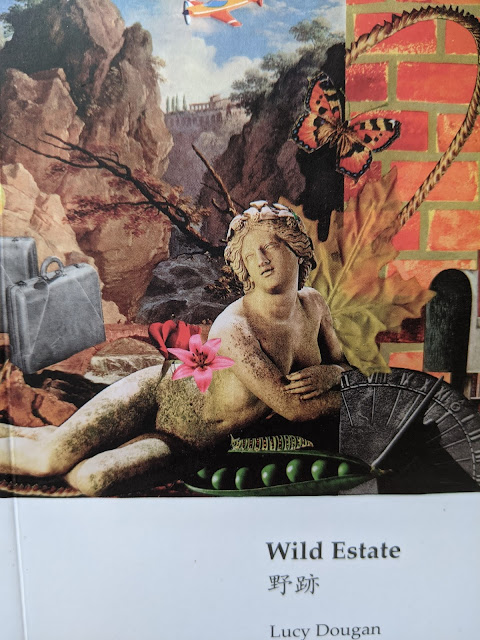
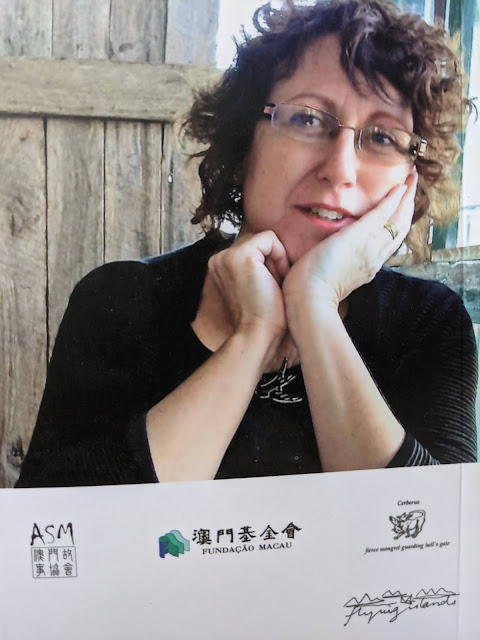
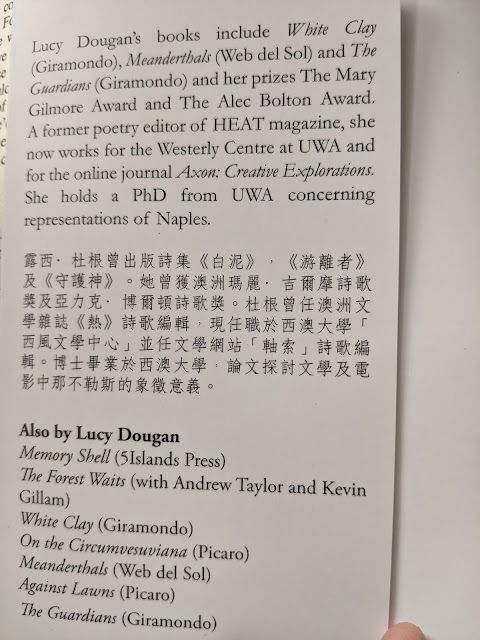
Lucy Dougan
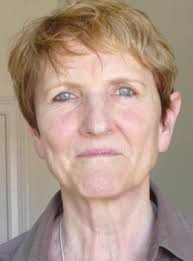
Pam Brown was born in Seymour, Victoria. Most of her childhood was spent on military bases in Toowoomba and Brisbane. Since her early twenties, she has lived in Melbourne and Adelaide and has travelled widely in the Pacific and Indian Ocean regions as well as Europe and the U.S., but mostly she has lived in Sydney. She has made her living variously as a silkscreen printer, bookseller, postal worker and has taught writing, multi-media studies and film-making and worked from 1989 to 2006 as a librarian at University of Sydney.From 1997 to 2002 Pam Brown was the poetry editor of Overland and from 2004 to 2011 she was the associate editor of Jacket magazine. She has been a guest at poetry festivals worldwide, taught at the University for Foreign Languages, Hanoi, and during 2003 had Australia Council writers residency in Rome. In 2013 she held the Distinguished Visitor Award at the University of Auckland, New Zealand
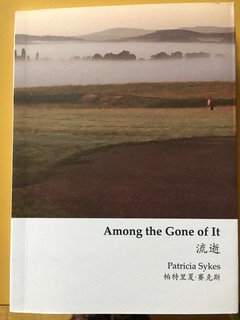
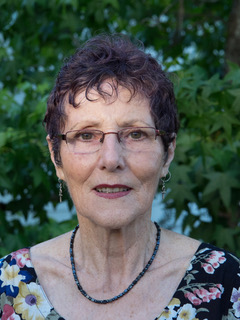
Patricia Sykes is a poet and librettist. Her poems and collections have received various nominations and awards, including the Newcastle Poetry Prize, John Shaw Neilson award and the Tom Howard Poetry Prize. Shortlisting include the Anne Elder, Mary Gilmore, and Judith Wright Awards. She has read her work widely, including on Australian, Paris and New Zealand radio. It has also been the subject of ABC radio programs, Poetica and The Spirit of Things. Her collaborations with composer Liza Lim have been performed in Brisbane, Melbourne, Sydney, Paris, Germany, Russia, New York and the UK. She was Asialink Writer in Residence, Malaysia, 2006. A selection of her poems, Aomg the gone of it, was published in an English/Chinese edition by Flying Island Books in 2017. A song cycle composed by Andrew Aronowicz, based on her collection The Abbotsford Mysteries, premiered at The Abbotsford Convent Melbourne — now an arts precinct — in 2019.
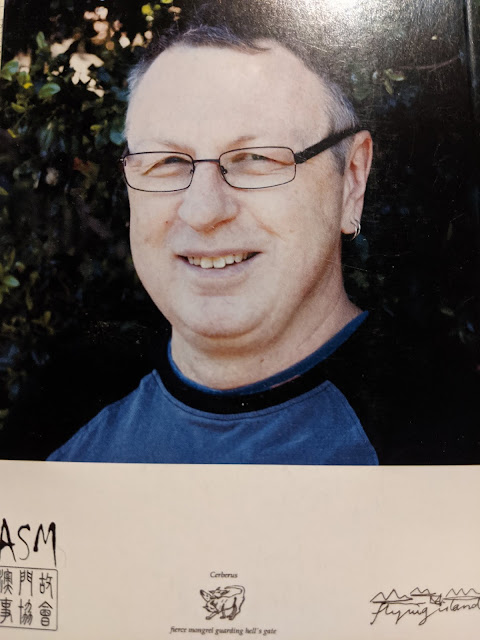
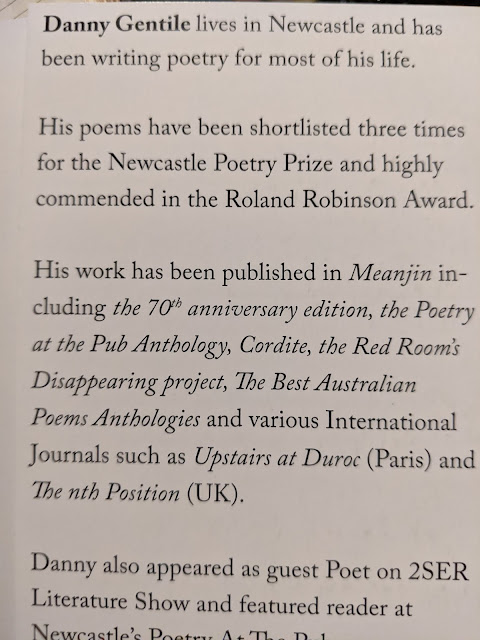
Hello there, Flying Islanders!
My first poetry collection – Gravity Doesn’t Always Work – got its soft launch at Kit’s Markwell Poet’s Picnic in December 2020 and is slated for launch in Sydney in February 2021.
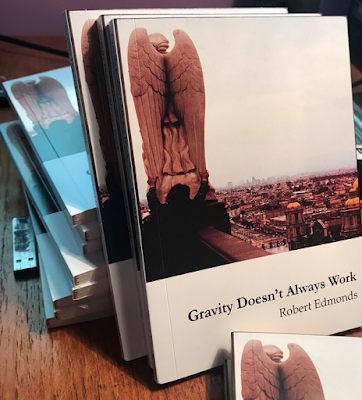
I’ve been published hither and thither a little bit, and had a couple of nice moments – Jack’s Pack was long-listed for the University of Canberra Vice-Chancellor’s International Poetry Prize) (not the world’s most lucrative international prize but the one with the longest title) and The Long Jetty Ghazals won Third Prize in the 2020 Newcastle Poetry Prize.
It’s great to have a book out, and it’s great to be in the company of other poets at the occasional launches and picnics, but also in spirit.
I live in Long Jetty on the Central Coast, and am in my late 50’s (well, I’m typing it, but I don’t believe it – still, if it gives you the impression that I’m a steady, wise old guy, then it’s worth admitting) (but I’m not).
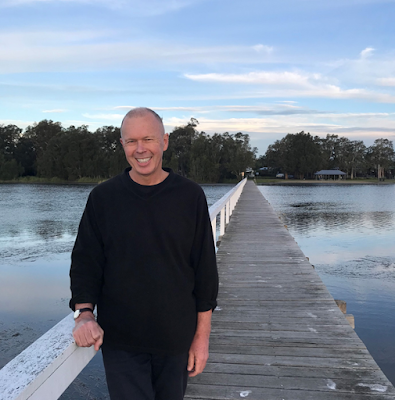
I’m for anybody who’s got a creative commitment, be it poetry, prose, art, music or dance or whatever. Not just a hankering, but a regular commitment to turn up and possibly (or in my case likely) fail.
I love truth in poetry, and I love humour and ghost stories and love too. But I just write the poem that turns up.
Here’s Jack’s Pack:
Jack’s Pack
When you’re twelve and bored, and then life hands
you the chance to mess around with a ghost
along with a bunch of three or four friends,
you seize it. One long suburban summer,
Barclay, Dowd and I, in our endless search
for novelty, tried a séance. We knew no fear.
After school, at home, my only fear
was how to keep other hungry hands
out of the cupboards and let me search
for an empty glass to harness our ghost,
some scrabble letters to fend off summer,
and ways to make some Ouija fun, to keep my friends
alive, alert, and keen to be friends
with each other. I didn’t count, I fear,
on hosting another guest that summer.
We’re all left to deal with what our life hands
us, each to each, with not a blessed ghost
of an idea what it is for which we truly search.
“I am Jack,” the glass spelt out. “I search
for my buried body.” My shouting friends
and I believed we’d found a daylight ghost!
For whom the blazing sunlight held no fear!
“Wow!” yelled Dowd. “If this murdered dead guy hands
us fair dink clues, we could dig him up this summer!”
We met each day, and spent our summer
holidays in a circle séance search
for Jack’s latest clues, then to ride, all hands
on bikes, to yards neither I nor my friends
had any right to snoop around in. What fear
is prosecution when you’re not scared of a ghost?
We found boots on a back step the ghost
said were his killers. Jack’s one big summer
fling had gone wrong. I felt a strong fear
of death – the glass lurched, and took a slow search
Around the table passing all my friends
and then it spelt – “you’ll all die at her husband’s hands”.
“There’s no ghost!” I yelled. “Barclay’s moving the glass! Search
me how all summer long he’s pulled a con!” Then, friends,
we ran in fear when the glass rose up through our hands.
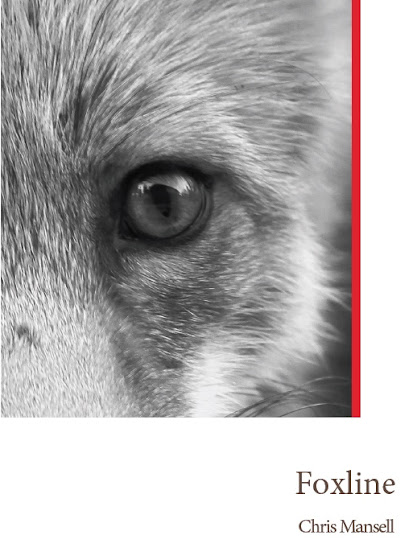
There are two characters in this new collection from Flying Islands: the fox, and the farmer. They are opposed but share an existential problem. The more charismatic figure is the fox (female, only once owning ‘vixen’) who is trying to understand her environment, the role of the farmer, the singing fences, the farmer. The farmer is a solitary figure walking with a gun, trying to get things right. Each have their own good intentions; neither of them entirely comfortable where they are.
Somewhere between Daylesford and Castlemaine in Victoria, Australia, they have a fox problem. Australia in general has a ‘fox problem’. Foxes are not indigenous to the continent, and they are predators of the kind that small marsupials were unaccustomed to resisting. Foxes, along with feral cats, and various other creatures which took up ecological niches, took a great toll on the wildlife.
It is also thought, believed strongly, that foxes attack livestock, often taking only the most delectable parts of an animal. They are not beloved by farmers. There are three ways of expressing their relationship to foxes: traps, guns, poison (1080). Savage traps are not legal, cage traps are ok – except now you have a fox in a trap; 1080 is often used but seen as unnecessarily cruel by some; and then there is the direct honesty of a gun, though less efficient.
Nevertheless, they are beautiful, alien animals; independent, foxy. In the wild they live for about three years (in captivity, much more), and their social structure depends on the conditions encountered. In some conditions there is only one breeding pair, in others all the females breed.
They are invaders, but have made the country their own. They know nothing else. The farmer of foreign heritage and the fox are not different in that respect.
Somewhere between Daylesford and Castlemaine there is the foxline: about 200 dead and scalped foxes hung from their heels on a fence by the roadway. So beautiful in the sun.
Read Magdalena Ball‘s review at Compulsive Reader and listen to her interview
Jean Kent did a great launch speech at Anna Couani‘s The Shop Gallery in February. As always, Kent is insightful and generous. You can read her words at Rochford St Review here
This year saw two publications that are especially important to me: Foxline from the invincible Flying Islands, and 101 Quads from a new conjunction of publishers Puncher & Wattmann and Thorny Devil Press.
Among a dozen or so previous books are Spine Lingo (from Kardoorair) and a collection of short prose fiction, Schadenvale Road (from Interactive Press). Seven Stations was published by Wellsprung Productions. This is the text of a song cycle (music by Andrew Batt-Rawden) that premiered at the Sydney Conservatorium of Music and was subsequently released on CD by Hospital Hill.
I work in a number of poetic forms, much of it experimental and in the alternative, or in unusual physical forms.
Some other titles include: Letters and The View from a Beach , Love Poems , The Fickle Brat (text + audio CD), Day Easy Sunlight Fine and Mortifications & Lies and some smaller publications and non-fiction. I have also published a children’s book, written a number of plays. I am publisher at PressPress and been a mentor to several Australian poets.
I won the Queensland Premier’s Award for Poetry and have been short-listed for the National Book Council Award and the NSW Premier’s Award and won the Amelia Chapbook Award (USA) and the Meanjin Dorothy Porter Poetry Prize.
There is more information on my site at www.chrismansell.com
French poet, play and puppet play writer, Is the author of more than 30 books and 2 C.Ds. He studied mathmatics and mucicology. Publishes at age 24, he started to pen poems not only on paper but through sounds in electroacoustic studios as well. (He is one of the founding members of the collective of poets Ecrits-Studio – website : ecritsstudio.free.fr) He is well known for his performances and readings, making his texts to be heard through his voice but also through gestures, transmitting his energy and playng sound tracks he creates for the occasion. His poetry explores metaphisical questions while his eyes linger tenderly on the world. He has been invited to many poetry events in France and abroad. His work has been translated into Albanian, Arabic, Italian, Greek and English. He also writes humorous and falsely naïve books under the pen name of his counterpart and kindred spirit « Armand Le Poête». Website : http://patrick.dubost.free.fr