These Flying Islands Blog

David McAleavey

Greetings. My Flying Islands pocket book is titled TALK MUSIC,  and it appeared in early 2018 (copyright date Dec. 2017).

I spent the Fall 2016 semester in a faculty exchange at the University of Macau, part of a short-lived program between UM and my home university, George Washington University in Washington, DC.

I have now retired from GW, effective Fall 2020, as a consequence of the coronavirus pandemic: teaching wholly online, with all its imperfections, seeming like more work than pleasure. I’m still adjusting to my new retired status; one of my strategies for exploring the rest of my life includes reducing my involvement in poetry, though I do hope to return to the endeavor, should I recover the motivation.

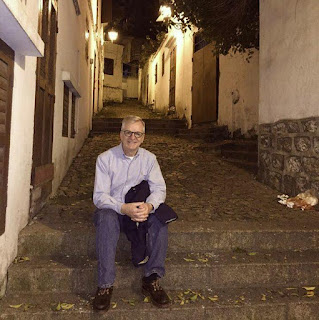
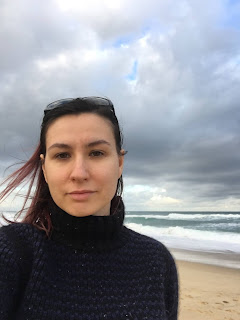
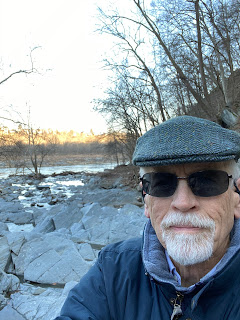
The selfie shows me on a recent walk here in Arlington, Virginia, near where Pimmit Run joins the Potomac River.

David McAleavey Read More »

Brian Purcell

Brian Purcell

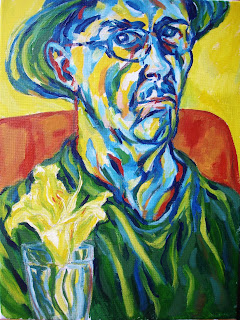
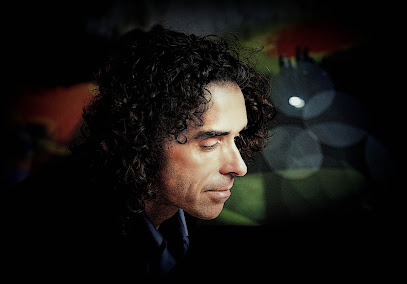
I’ve been publishing poetry in magazines such as Meanjin and Southerly, and anthologies like Australian Love Poems, for nearly forty years. During 1985-95 I was the lead singer/lyricist for the band Distant Locust, which toured Europe and released CDs there in the early 90s. I am also a painter and working towards my first solo exhibition, as well as working on a poetry manuscript for Flying Islands.

Construction Site

breathing

like an infernal machine

that waits for me

limbs now diagonal

                        horizontal, vertical

all movements of ease

                        acrobatical

the goblins are digging up the streets

            down the hill

ribbons of wind and light

knotting in the trees

and the full moon

cracks a half-grin

at nightfall, at 2am

slumped on the side of the road

I wait for you

bound to you

until the cars parading the avenue

outrunning the quarantine

are ghostly still

carapaces

filled with a fragile

network of cracks

meanwhile the earth shakes

machines climb the hill

the virus filling everything

with its rotten breath

I remember the way

moonlight followed

the curls in your hair

I remember

how still we were

when silence was enough

all I do now

is open and close these doors

2am

while I try to sleep

the ground

beneath my feet
is breaking up

Brian Purcell Read More »

Richard James Allen


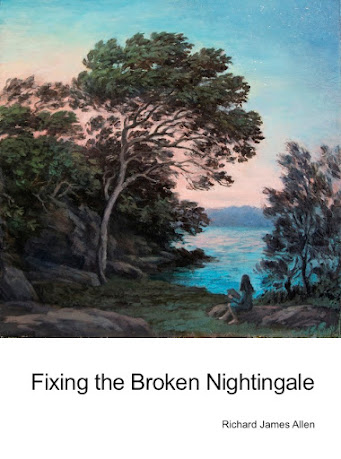
Richard James Allen is an Australian poet.  He was born in Kempsey, New South Wales, on the unceded lands of the Dunghutti Aboriginal People.  His writing has appeared widely in journals, anthologies, and online over many years.  His latest volume of poetry, The short story of you and I, was published by UWA Publishing in February 2019.  A suite of recent poems, Minimum Correct Dosage, commissioned by Red Room Poetry, was published in December 2019.  Previous critically acclaimed books of poetry, fiction and performance texts include Fixing the Broken Nightingale (Flying Island Books), The Kamikaze Mind (Brandl & Schlesinger) and Thursday’s Fictions (Five Islands Press), shortlisted for the Kenneth Slessor Prize for Poetry.  

Former Artistic Director of the Poets Union Inc., and director of the inaugural Australian Poetry Festival, Richard is the creator of #RichardReads (https://soundcloud.com/user-387793087), an online compendium of Global Poetry, Read Aloud, and an editor of the landmark anthology, Performing the Unnameable: An Anthology of Australian Performance Texts (Currency Press/RealTime). 

Well known for his multi-award-winning career as a filmmaker and choreographer with The Physical TV Company (http://physicaltv.com.au/), and critically acclaimed as a performer in a range of media and contexts, Richard has a track record for innovative adaptations and interactions of poetry and other media, including collaborations with artists in dance, film, theatre, music and a range of digital platforms.  

The recipient of numerous awards, nominations, and grants, as well as multiple opportunities for presentations, screenings and broadcasts, he graduated with First Class Honours for his B.A. at Sydney University and won the Chancellor’s Award for most outstanding PhD thesis at the University of Technology, Sydney.  

how many umbrellas or love letters

how many umbrellas have I lost in my lifetime – left in the pristine

foyers of yoga centres, in the muddy corners of coffee shops, in the

mysterious worlds that exist under the seats in bus shelters, dangling

like bats off park benches?

I imagine each of these umbrellas, all dead and forgotten now of course, as giant origami love letters, which people I don’t know opened to the plunging sky with delight and relief.

looking back, these random forgetfulnesses may have been the major contribution of my life, popping up in the lives of others like the tips of islands emerging in a world where the sea levels are actually dropping to save beautiful but bedraggled shipwrecked wayfarers in a lost play by a man still named Bill.

 And then 

the rainless dawn.

(from Richard James Allen, Fixing the Broken Nightingale, Flying Island Books, 2014)
Richard James Allen Read More »

George Watt

The author and editor of several books, both university monographs and English language text books,   I have come to the writing poetry late in life with the publication last year of “Sandpaper Swimming” with Flying Island Books.  My first book of poetry.

My first book, “The Fallen Woman in the 19th Century English Novel”, published in 1984 was recently re-released by Routledge and can be found on Amazon. I am currently working on a novel which looks like it probably has just found publisher.  After retiring from a career in teaching and administration in universities in Australia, USA, Japan and Macau I completed a masters in creative writing at the University of Edinburgh, Scotland. The best thing I ever did!  

George Watt Read More »

Irina Frolova

Irina Frolova was born in Moscow in 1981, in the former Soviet Union. She moved to Australia in 2003, and now lives on the Awabakal land in NSW with her three children and two fur babies.

Irina has a degree in philology from Moscow City Pedagogical university, and she is currently studying psychology at Deakin University.

Her work has appeared in Not Very QuietAustralian Poetry CollaborationBaby Teeth JournalRochford Street ReviewThe Blue Nib, and The Australian Multilingual Writing Project, as well as various anthologies. 

Irina is a regular at Newcastle Poetry at the Pub where she was a featured poet in January,2019.

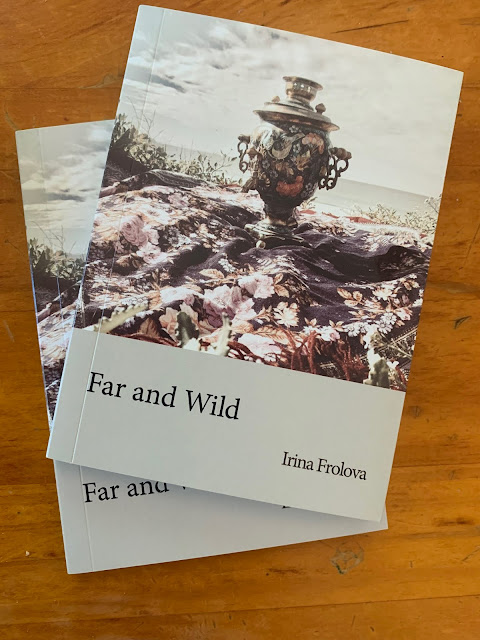
Her first collection of poetry Far and Wild was published by Flying Island Books in January, 2021.

 Far and Wild speaks to the experience of immigration and a search for belonging. It draws on fairy-tales and explores archetypes through cultural and feminist lenses. 

The following poems were included in Far and Wild.

how long

I could tell you

how the snow glistened in the midday sun

                                                                 like razor blades

how we shivered

every time the bus stopped and opened its doors

                                                                glazed with frost

how I thawed my feet

on the radiator reclaiming my toes in a moment’s

                                                            excruciating victory

how on sports days

at school we had to bring skis as well as bags

                                                                        of textbooks

how every family

with children owned a sled and some days we all

                                                            looked like Rudolph

how snowflakes

floated above us    their perfect shapes melting

                                                                 on our eye-lashes

how he kissed

me in the wind not caring for tomorrows

                                                                      of cracked lips

how far

winters stretched   from October well into April

                                                                             most years

how odd

these parching southern summers have been

                                                                                how long

Baba Yaga Next Door

Pigeon-feeding, vodka-drinking,

winking, grinning

no-fucks-given

silver-haired vixen. She

is a cautionary tale.

Some said loony,

others – lonely,

no one really came too close.

Fear the old maid,

watch the crone:

one, who dares

to grow old

on her own

tiny pension

in her clutter-filled room.

Are they skulls around

her home?

Will she eat your little kids?

Curse you? Free you?

Will she make you

see the forest

through the whispers

of the darkness

in the old bony trees?

Irina Frolova Read More »

Dan Disney

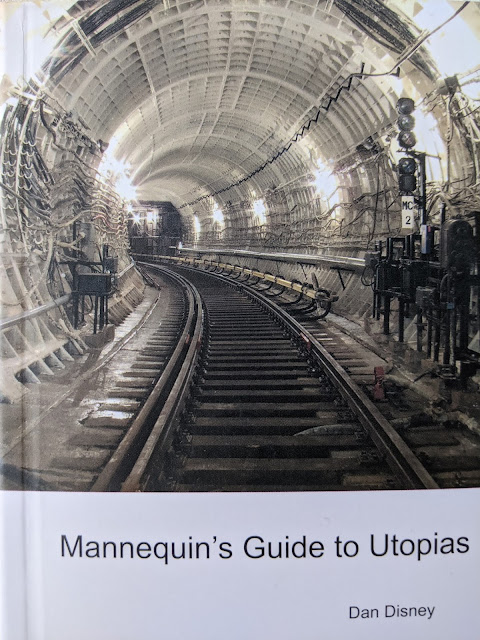
Originally from Australia, Dan Disney has lived in South Korea for the last decade, where he teaches in the English Literature Program at Sogang University, in Seoul. His collections include and then when the (John Leonard Press), either, Orpheus (UWAP), and Report from a border (Light-Trap Press). He is editor of Beyond Babel: Creative Writing in Second Language Contexts (John Benjamins)and co-edited both Writing to the Wire (UWAP, with Kit Kelen), an anthology of poems protesting the dehumanization of people seeking political asylum in Australia, and New Directions in Australian Poetry (Palgrave, with Matthew Hall), in which a number of Australian poets theorize on the ethical possibilities of creative production into the early 21c.Dan Disney’s Flying Islands’ pocket book is Mannequin’s Guide to Utopias 
Dan Disney Read More »

Sarah St Vincent Welch

Sarah St Vincent Welch is a Canberra-based writer and image-maker. She is one of the organisers of ‘That Poetry Thing That Is On At Smith’s Every Monday Night’ at Smith’s Alternative (a live-music venue that supports art and community). She is part of the writer and visual artists collective ‘Postcards from the Sky’ which meet at Belconnen Arts Centre. She is pleased her work will be part of Flying Islands Pocketbooks 2021. Her chapbook ‘OPEN’ was published by Rochford Press in 2019. She writes in as many forms as she can including short stories, creative non-fiction, and novels (in-progress). She blogs about reading and writing, place and time, at sarahstvincentwelch.com. She is currently facilitating a long-term poetry project with Canberra poets and community, ‘Kindred Trees’, in response to trees in The Australian Capital Territory. She is working on a major creative non-fiction exploring mental crisis. She also on occasion chalks poetry on the footpaths at art festivals, in response to place, a practice she calls #litchalk. Her heart belongs to two cities, Canberra (where she has lived for over thirty years) and Sydney, where she was born and grew up.

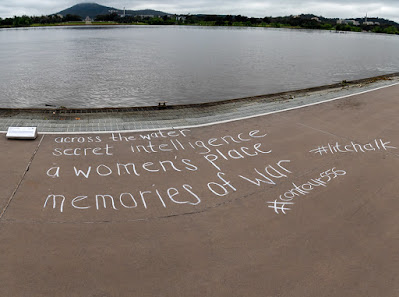
#litchalk looking across Lake Burley Griffin to Mt Ainslie, ASIO and The War Memorial in Canberra for contour556 public art festival


Vasko asks me to play, and so I do …

(He who is not smashed to smithereens

He who remains whole and gets up whole

He plays

       from Before play – Vasko Popa)

in line we step now

now some out of line

long long toe steps

some now left behind

the wolf puffs, he

stills a statue, he

checks the sky 

counts the shadows

we shout and totter

are chased

and eaten

we scream and question —

what’s for dinner?

someone’s moggie                         

knitting

rocking

twine and thread and dip

pass the cradle

pinch and cast

hand a loom

a harbour bridge

a pat is a slap is a hit

a baby she was

she was 

she — went — a —

same time same time

smarting

blister

she — went — a —

faster

she was

orbit stones

blink and pop

the conker sun

rolls fast

scoop the moon lead

bruise a thumb-bed

shoot the comets

past chalk marks

squeeze the sun

against a knuckle 

Kohoutek’s clinked

the Earth

polished bone raps

bone poked skin

throw it missile straight

toss up hair high

high to pick up

quick a twelvsie 

scatter

sweep

a onesie

a twosie

dead sheep

it comes back —

catcher —

so throw it away!

tipfingers

arcshoulder

assembly hall wall

a song in time

a smashed window

(Vasko made me do it!)

against the back wall

the neighbours’ fence

the cupboard door

inside yourself

it comes back 

comes back —

so throw it away!

(Vasko Popa was a twentieth century Serbian poet, and he was often inspired by folk tales and riddles. )

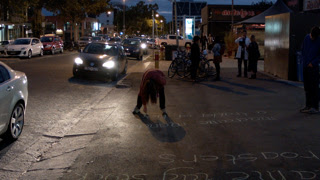
Sarah St Vincent Welch chalking a poem outside 

Lonsdale St Roasters cafe as Noted Festival goers walk past on 

their way to a Literary Trivia contest as part of the ‘lithop’ event

(photo by Dylan Jones)

(photos Sarah St Vincent Welch)

Sarah St Vincent Welch Read More »

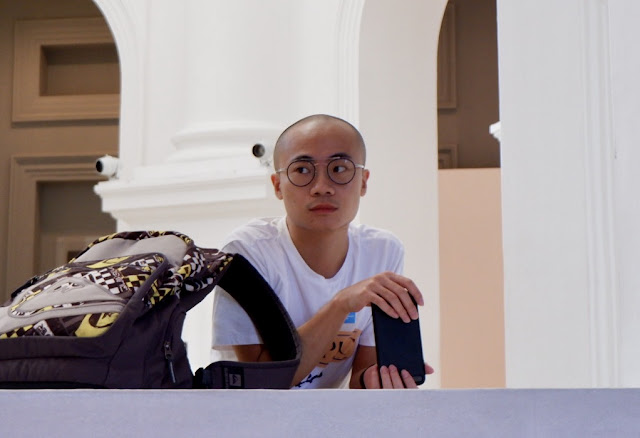
Chen Fei

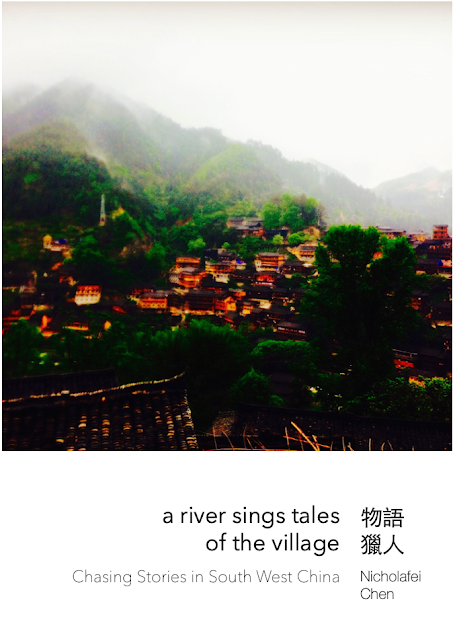
Chen Fei, born and raised in Guizhou, is a story hunter, a traveler and a graphic designer. Resident in Macao for thirteen years, Fei is currently a Resident Tutor at Henry Fok Pearl Jubilee Residential College in the University of Macau, where he is currently completing a PhD degree in Literary Studies. 

______________________

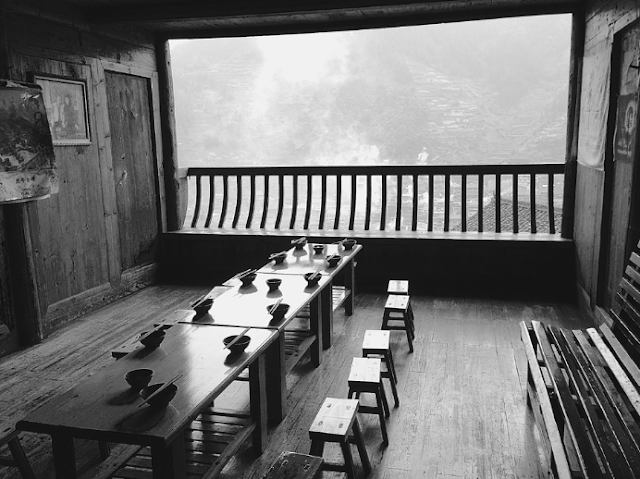
(picture of a meiren kao)

the patio bench meiren kao – 18th April 2014

meiren kao, a man leaning on it will be more elegant, suave’

the restaurant manager said to me 

meiren kao, a lookout for men

to monitor enemy movements

a belvedere for girls to wait for their beloved

and now I’m leaning here, waiting for my poetry ideas 

downstairs Miao waitresses are welcoming guests with wine and song

on the street visitors are taking photos

some people are selling barbecued food 

people sitting on the meiren kao of other houses are holding cameras, ready to capture any surprise 

here on the meiren kao

I see the whole village

I see people come and go

people come, stay and start businesses here people grow up

people make money and leave

people grow old

sing songs 

on such a pleasant afternoon as this I am sitting on the meiren kao

eating my barbecued food

listening to the stories in the songs 

美人靠 

2014年4月18日

“美人靠 美人靠

男生坐著也要俏三俏”

餐館經理笑著跟我說

美人靠,男人們監視敵人舉動的瞭望台 

女人們等待心上人歸家的觀景台 

此刻我坐在這裡,等待著靈感來教我寫詩

樓下苗族女侍者正在用歌舞和米酒 

歡迎著賓客

街上遊客們在拍照 

有些攤販在賣燒烤 

有些人坐在其他吊腳樓的美人靠 

舉著相機,等待著驚喜 

美人靠上

我看到整個寨子 

我看到有的人來了,住了下來 

有的人走了,去往便捷的都市生活 

有的人暫住,尋找心裡的平靜 

有的人成長,無憂無慮地成長 

有的人急於賺錢,開酒吧開客棧

他們的故事 

沉澱為山間的迷霧 

流淌成河裡的歌唱

夜幕降臨時分 我坐在河邊 吃著燒烤 

聽著 一首又一首的歌謠

Chen Fei Read More »

Harold Legaspi

Harold Legaspi is a poet writing in Darug land. 

Letters in Language, fromFlying Islands Pocket Books of Poetry series with Cerberus Press and Association of Stories in Macau, January 2021.

Excerpt from The Edge of Seas vs Lost Generation

Loners

Neither man nor woman. No beast nor man.

            Begets ideals begets passion begets love begets thought begets survival. A fibrous scar. Abscess. Somewhat difficult.

            Everyday is a war, it is in need of battles that keep without the strange, estranges and arrested development. The first enquiry of available life is a revelation of poetry. Culture is irrational. Somewhat difficult.

            How the Loner outthinks louder with no definition. Amid physical relief, a place or places of falling. Somewhat difficult.

            One is given a gender, seemingly insoluble manifolds or equations. We suggest the flesh. Pus emerges from the third leg or concave viscera, or thereabouts, withdraw it to live life on a beach, or a lifeless planet. How the mind sounds of palms and sugars begets the machines with its substance-abuses. Available life is somewhat difficult.

            An end of equations, equate scaffolds of constancy. To posses will. And gladly achieve values and it does mean virtues and it does not scold or scald.

            Immune to classification. Incalculable. Totally destined and not bone. Aurora Australis.  

Harold Legaspi Read More »

Nathan Curnow

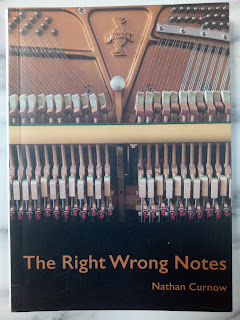
Nathan Curnow is an award-winning poet, spoken word performer and past editor of literary journal, Going Down Swinging. His books include The Ghost Poetry ProjectRADARThe Right Wrong Notes and The Apocalypse Awards. He has recently taught creative writing at Federation University, and toured Europe in 2018 with loop artist, Geoffrey Williams, performing in Poland and opening the Heidelberg Literature Festival in Germany. He lives in Ballarat and is the current judge of the annual Woorilla Poetry Prize.

The Piano Lesson

The last piano lesson I ever had
ended in a drug raid on my teacher’s house.
Mum was waiting in the car as she did each week.
She saw the cops pull up with their dogs.
When I ask her about it twenty years later
she’s forgotten everything—the raid, the lessons,
begging me to practice, that we even had a piano of our own.
I want to ask her how, and keep asking, how
it’s possible to forget all this, considering her devotion
to the black and white, the tunes of discipline and obedience.
I let it go because she blames herself for all she can
and can’t recollect. There’s a chord
that she’s an expert of playing—the guilt hammers,
the sustain of regret. So what now of this memory
if I can’t afford to share it? I want it to resonate.
But it stresses her frailties—a grand excuse
to keep pounding away at herself. It’s a grey-scale art
every child must learn to master in these final years—
to force the duet or to recognise it’s time
to learn both parts of Chopsticks for yourself.
Now my daughter plays and I wait beside her
turning the page when she nods, the metronome
tocking, her little hands, in reflection
all the right wrong notes.

Nathan Curnow Read More »