Poems

Robert Edmonds

Hello there, Flying Islanders!

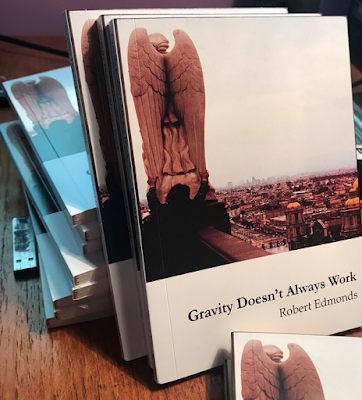
My first poetry collection – Gravity Doesn’t Always Work – got its soft launch at Kit’s Markwell Poet’s Picnic in December 2020 and is slated for launch in Sydney in February 2021.
I’ve been published hither and thither a little bit, and had a couple of nice moments – Jack’s Pack was long-listed for the University of Canberra Vice-Chancellor’s International Poetry Prize) (not the world’s most lucrative international prize but the one with the longest title) and The Long Jetty Ghazals won Third Prize in the 2020 Newcastle Poetry Prize.

It’s great to have a book out, and it’s great to be in the company of other poets at the occasional launches and picnics, but also in spirit.

I live in Long Jetty on the Central Coast, and am in my late 50’s (well, I’m typing it, but I don’t believe it – still, if it gives you the impression that I’m a steady, wise old guy, then it’s worth admitting) (but I’m not).
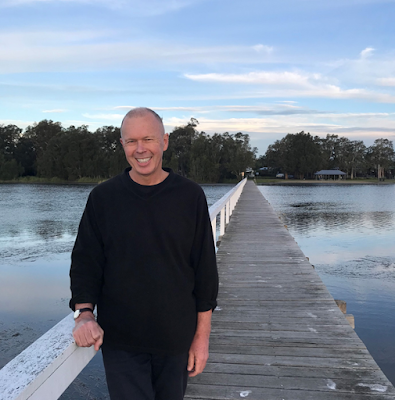
I’m for anybody who’s got a creative commitment, be it poetry, prose, art, music or dance or whatever. Not just a hankering, but a regular commitment to turn up and possibly (or in my case likely) fail.

I love truth in poetry, and I love humour and ghost stories and love too. But I just write the poem that turns up.

Here’s Jack’s Pack:

Jack’s Pack

When you’re twelve and bored, and then life hands

you the chance to mess around with a ghost

along with a bunch of three or four friends,

you seize it. One long suburban summer,

Barclay, Dowd and I, in our endless search

for novelty, tried a séance. We knew no fear.

After school, at home, my only fear

was how to keep other hungry hands

out of the cupboards and let me search

for an empty glass to harness our ghost,

some scrabble letters to fend off summer,

and ways to make some Ouija fun, to keep my friends

alive, alert, and keen to be friends

with each other. I didn’t count, I fear,

on hosting another guest that summer.

We’re all left to deal with what our life hands

us, each to each, with not a blessed ghost

of an idea what it is for which we truly search.

“I am Jack,” the glass spelt out. “I search

for my buried body.” My shouting friends

and I believed we’d found a daylight ghost!

For whom the blazing sunlight held no fear!

“Wow!” yelled Dowd. “If this murdered dead guy hands

us fair dink clues, we could dig him up this summer!”

We met each day, and spent our summer

holidays in a circle séance search

for Jack’s latest clues, then to ride, all hands

on bikes, to yards neither I nor my friends

had any right to snoop around in. What fear

is prosecution when you’re not scared of a ghost?

We found boots on a back step the ghost

said were his killers. Jack’s one big summer

fling had gone wrong. I felt a strong fear

of death – the glass lurched, and took a slow search

Around the table passing all my friends

and then it spelt – “you’ll all die at her husband’s hands”.

“There’s no ghost!” I yelled. “Barclay’s moving the glass! Search

me how all summer long he’s pulled a con!” Then, friends,

we ran in fear when the glass rose up through our hands.
Robert Edmonds Read More »

Chris Mansell

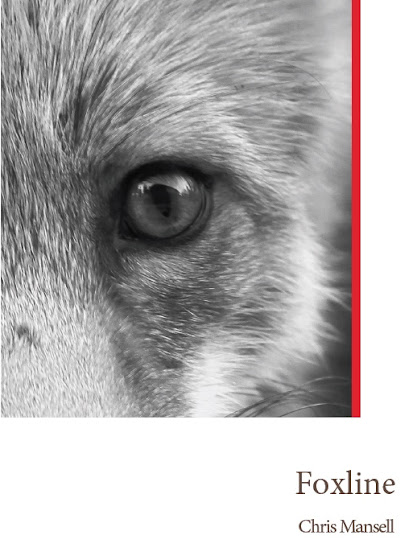
There are two characters in this new collection from Flying Islands: the fox, and the farmer. They are opposed but share an existential problem. The more charismatic figure is the fox (female, only once owning ‘vixen’) who is trying to understand her environment, the role of the farmer, the singing fences, the farmer. The farmer is a solitary figure walking with a gun, trying to get things right. Each have their own good intentions; neither of them entirely comfortable where they are.

What came before

Somewhere between Daylesford and Castlemaine in Victoria, Australia, they have a fox problem. Australia in general has a ‘fox problem’. Foxes are not indigenous to the continent, and they are predators of the kind that small marsupials were unaccustomed to resisting. Foxes, along with feral cats, and various other creatures which took up ecological niches, took a great toll on the wildlife. 

It is also thought, believed strongly, that foxes attack livestock, often taking only the most delectable parts of an animal. They are not beloved by farmers. There are three ways of expressing their relationship to foxes: traps, guns, poison (1080). Savage traps are not legal, cage traps are ok – except now you have a fox in a trap; 1080 is often used but seen as unnecessarily cruel by some; and then there is the direct honesty of a gun, though less efficient.

Nevertheless, they are beautiful, alien animals; independent, foxy. In the wild they live for about three years (in captivity, much more), and their social structure depends on the conditions encountered. In some conditions there is only one breeding pair, in others all the females breed. 

They are invaders, but have made the country their own. They know nothing else. The farmer of foreign heritage and the fox are not different in that respect.

Somewhere between Daylesford and Castlemaine there is the foxline: about 200 dead and scalped foxes hung from their heels on a fence by the roadway. So beautiful in the sun.

Read Magdalena Ball‘s review at Compulsive Reader and listen to her interview

Jean Kent did a great launch speech at Anna Couani‘s The Shop Gallery in February. As always, Kent is insightful and generous. You can read her words at Rochford St Review here 


Who and what

This year saw two publications that are especially important to me: Foxline from the invincible Flying Islands, and 101 Quads from a new conjunction of publishers Puncher & Wattmann and Thorny Devil Press.  

Among  a dozen or so previous books are  Spine Lingo (from Kardoorair) and a collection of short prose fiction, Schadenvale Road (from Interactive Press). Seven Stations was published by Wellsprung Productions. This is the text of a song cycle (music by Andrew Batt-Rawden) that premiered at the Sydney Conservatorium of Music and was subsequently released on CD by Hospital Hill.

I work  in a number of poetic forms, much of it experimental and in the alternative, or in unusual physical forms.

Some other  titles include: Letters  and The View from a Beach , Love Poems , The Fickle Brat (text + audio CD), Day Easy Sunlight Fine  and Mortifications & Lies  and some smaller publications and non-fiction. I have also published a children’s book, written a number of plays. I am publisher at PressPress and been a mentor to several Australian poets.

I won the Queensland Premier’s Award for Poetry and have been short-listed for the National Book Council Award and the NSW Premier’s Award and won the Amelia Chapbook Award (USA) and the Meanjin Dorothy Porter Poetry Prize.

There is more information on my site at www.chrismansell.com

Chris Mansell Read More »

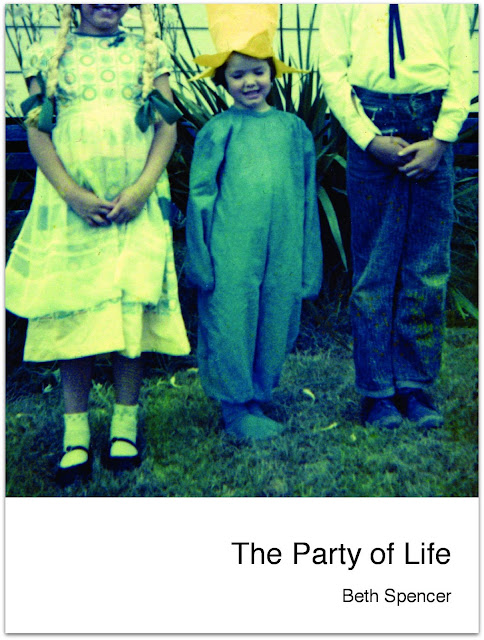
Beth Spencer – The Party of Life

The Party of Life was published by Flying Islands in the Pocket Book series in 2015. Translated with love and care by Ruby Chen. Huge thanks to series editor Kit Kelen. 

Beth Spencer is an award-winning author of poetry and fiction. Her work has frequently been broadcast on ABC-Radio National, and her books include How to Conceive of a Girl (Random House), The Party of Life (Flying Islands), Vagabondage (UWAP) and The Age of Fibs (ebook published by Spineless Wonders and winner of the 2018 Carmel Bird Digital Literary Award).  She lives and writes on Guringai & Darkinjung land on the NSW Central Coast; she has a website at www.bethspencer.com, and can be found on social media @bethspen

The party of life

For my twenty-fifth birthday the invitation said ‘wear black.’ 

An old primary school photo with my anxious face circled 

(including the big white bow in my hair)

had an arrow and the words ‘Will this girl make it to 25?’

scrawled across the bottom.

Perhaps it was those sixties cartoons 

that declared ‘Never trust anyone over…’

Or maybe I just always felt

I would burn myself out.

Each new crack in my heart —

each new cut of experience 

digging a grave in soft soil.

So we called it an ‘instead-of-a-suicide party’

and told everyone to wear black.

In the kitchen my housemates prepared a storyboard 

out of the pickings from a cardboard box of photos and souvenirs.

Below a snap of my cubby house up on a trailer

(taken on the day it was given away to neighbours)

Lynne wrote: ‘Never knew a permanent home’

and stuck a pin in it.

Ridiculously, we fought over this.

The historian, versus the journalists and fabulists.

I was over-ruled, of course (howled down / wriggling).

They evicted me from the party room — after all, I was dead.

Leaving them free to sift and interpret the traces

with latitude and glee. (Never let the facts, etc.)

     And here I think about this

     twenty-five years older and wiser,

     as I draw the curtains inside my 

     hightop campervan

     wash my cup and plate,

     climb into my narrow bed…

On the evening of my twenty-fifth birthday

I was shoo-ed out of the kitchen, away from the party food,

and commanded to lie in state in my bedroom.

So I put on my Miss Haversham wedding dress

(complete with faint patches of mildew)

and arranged myself on top of the covers.

Jill’s boyfriend came in to keep me company, sitting quietly

in his black turtleneck, my unofficial confessor.

Each time I heard the girls calling

‘Oh she makes a lovely corpse’

— their voices drifting down the hallway — 

I stubbed out my cigarette, 

stashed the champagne under the bed,

clasped my rose, closed my eyes, 

crossed my bare feet neatly.

Mostly, the guests were speechless.

The flickering candles, 

the baby-powder on my face.

The bandaids just visible at the edges of my wrists.

(Did we go overboard?)

Even the trendy-punks from down the street muttered 

‘This is macabre’ and left.

Only Theresa and Jenny after pausing in the doorway for 

just a heartbeat (or two, maybe three)

flung themselves at my feet weeping, wailing

and gnashing their teeth.

I listened to them recounting our lives together 

(‘Oh, remember when, remember when…’)

and smiled a secret smile in the candlelit dark.

Outside, in the bright living room the guests bonded 

over the polystyrene tombstone,

the epitaph from Plath, 

the black crepe-paper-chains

and the cardboard coffin 

containing the dips and chips.

The volume grew steadily as they became ever more 

Exuberant (relieved just to be alive).

Through the wall: voices rising, laughter, music.

— The Clash, Blondie, Human League, Marvin Gaye —

every now and then 

the brittle sound of a glass being smashed.

Never knew a permanent home.

I honestly can’t say why that one rankled so much. 

A fibro cubby house with its fake Fred Flintstone-walls.

As if that was my childhood home —

that small, that flimsy?

(‘From the town of bed-rock

there are things right out of his-tory.’)

But I guess it is true

I always had

an urge (or a habit, not entirely conscious)

— a penchant — 

to cast myself adrift,

trusting to the invisible parachute.

The schools I chose, the uni where I knew no-one, 

moving state, jettisoning relationships.

Always an eye out for the clean slate,

the chance to reinvent (write the storyboard).

At midnight on my twenty-fifth birthday

I rose

and joined the party in the living room.

We sang Happy Birthday and

Hip hip hooray.

And I shed the lace wedding dress

emerging whole in a vintage white mini

with a beaded neckline and danced till dawn.

Virginal amid the inner city black.

I rise… I rise…

And now.

  Here I am

at fifty

(rising, rising)

trailing wisps of stuff down the highway

(the odd patch of mildew).

In a cubby house again on wheels,

still looking 

for the living room. 

*audio version here: https://soundcloud.com/bethspen/the-party-of-life

The Party of Life – launch speech by Bernard Cohen — https://rochfordstreetreview.com/2016/01/19/eccentric-sustaining-bernard-cohen-launches-the-party-of-life-by-beth-spencer/

Beth Spencer – The Party of Life Read More »

Xia Fang

Xia Fang is a bilingual poet and translator. She has published two collections of translated poems, and has since begun writing her own poetry. Her poems have appeared in The Postcolonial Text, Mascara, Mānoa, Marathon, and two online writing projects: Project 365+1 and Project 52. Her early written work was influenced by new life experiences, including relocating to Macao where she completed her PhD in literary studies in 2019. She has since moved to Mainland China and is currently a Lecturer at the College of International Studies, University of Yangzhou.

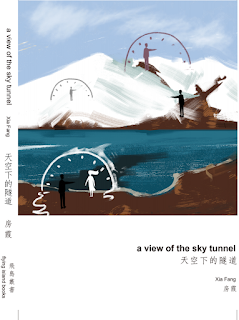
Here are two poems and their Chinese counterparts selected from her poetry collection A View of the Sky Tunnel(Flying Islands 2017)

underground

what I like about the underground

is its urbanization

what I like about urbanization

is the free entry we get to the museum

what I like about museums is their all-inclusive greatness

what I like about greatness is the ant-like collectivism

what I like about collectivism

is the way people rush to a destination

under ground

in the prime of its life– a Macao portrait

the devil’s ivy potted —

bright green foliage

climbs a pale green wall

the rusty phonograph

struggles remembering

yesterday’s songs

the rocking chair tells

five centuries’ stories

the wind sweeps over

a pond of pink lotuses

(eternal beauties to the Portuguese

who sojourned here)

the teenagers sit by a marble railing

the photographer waits, with utmost patience

for the perfect moment to take

something in black and white

地下鐵

我喜歡地下鐵

是因為它的城市化

我喜歡城市化

是因為免費入場的博物館

我喜歡博物館

是因為包羅萬象的偉大

我喜歡偉大這個詞

它讓我想到如螞蟻般的集體主義

當我想到集體主義

我想到的是為了趕往一個目的地

人們匆匆忙忙搭乘地下鐵

繁盛之時

一張搖椅晃悠悠

依然講述著五個世紀以前的故事

葡萄牙人的留聲機部件完整

卻無法播出昨日的歌曲

一盆吊蘭照亮淡綠色的牆

濃鬱的綠色

從容的生長

濕地邊粉荷綻放

表達著東方女人的含蓄之美

不知曾讓多少葡國漂泊客也心生眷顧

漢白玉柵欄上

坐著一排風化正茂的少年

攝影師站在臺階下

耐心等待一個完美瞬間

拍攝一張黑白張片

Xia Fang Read More »

Lou Smith

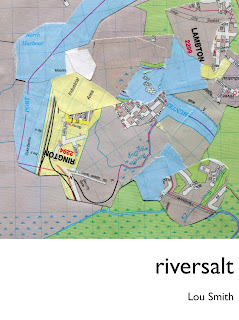
Lou Smith is a Melbourne-based poet of Welsh, Jamaican and English heritage who grew up in Newcastle, NSW. Her poetry has been published in journals and anthologies both in Australia and overseas including Wasafiri, Mascara Literary Review, A Slow Combusting Hymn, Overland, The Caribbean Writer, Nine Muses Poetry, sx Salon, Soft Surface and Caribbean Quarterly. Her book riversalt was published by Flying Islands in 2015.

Lou has worked as an editor and proofreader and was the co-founder of independent publisher Breakdown Press, publishers of political poster series and books such as How to Make Trouble and Influence People: Pranks, Hoaxes, Graffiti and Political Mischief-Making from Across Australia and YOU: some letters from the first five years. 

She is currently working on a number of writing projects including two new books of poetry, one of which is set in her hometown of Newcastle during the Great Depression. 

Lou has a PhD in creative writing from the University of Melbourne where she sometimes teaches. 

 www.lousmith.net

Here are three poems are from my collection riversalt.

An Evening Swim at Kilaben Bay

Between the wooden slats

of the boardwalk

distant lights of houses

blur in a diffraction of amber

like Venus through drizzle

or in the curve of waves

fanning from shore

Sugar

My grandma

sprinkled sugar

on banana fritters

caramelising it in butter

specks of sweetness 

dissolving through batter

into the melting warm fruit

this island was built on sugar

Mum will only eat strawberries

when coated

in enough castor sugar

to form a hot pink pool

in the bottom of the bowl

swirls into thickened cream

like blood entering water

this island was built on sugar

in the day’s heat

men with machetes slice 

through hedges, the cutlass

a legacy from when those

who had been enslaved

cut sugarcane

hands bleeding

like sugary sap

this island was built on sugar

Quarry

The dampness flows  from the hill

the dampness

moulds us

taproot still

the dampness flows

from the hill

and we scoop up water in jars

catch tadpoles with

glutinous eyes

in the quarry

where the men used to mine

with horse and dray

in the quarry

in the heat of summer days

skin off shoulder blades

peels like dried glue sheets

and words hang from trees like rotting vines

not sapped, not blood that drips

and pains amber red

but green and fungal

smelling of carcass flesh

lantana delicate pale pink and lemon,

the scent of not here,

lantana camara, everywhere

in the quarry 

skin pitted on hard small rocks

gravel used for roads

like this cul-de-sac

where time travels in circles

the crow caws

and the bush beckons us

through spotted gums and shade of leaves,

to leave the yellow ochre 

ground,

barren-hard

and walk into the cool

Lou Smith Read More »

Dominique Hecq

Dominique Hecq grew up in the French-speaking part of Belgium. She now lives in Melbourne. With a BA in Germanic Philology, an MA in literary translation, and a PhD in English, Hecq writes across genres and disciplines—and sometimes across tongues. Her creative works include a novel, three collections of stories, and ten volumes of poetry— Kaosmos (Melbourne Poets Union) and Tracks: Autofictional Fragments of a Journey without Maps (Recent Work Press), both published in 2020 are her latest.

Among other honours such as the Melbourne Fringe Festival Award for Outstanding Writing and Spoken Word Performance, the Woorilla Prize for Fiction, the Martha Richardson Medal for Poetry, the New England Poetry Prize, and the inaugural AALITRA Prize for Literary Translation (Spanish to English), Dominique Hecq is a recipient of the 2018 International Best Poets Prize administered by the International Poetry Translation and Research Centre in conjunction with the International Academy of Arts and Letters.

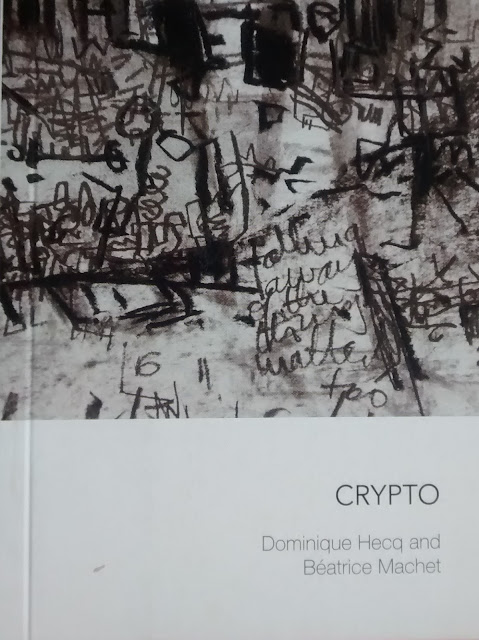
Fencing with Béatrice Machet in 2018, Dominique contributed a bilingual Flying Islands Press pocket book titled Crypto.

Plus proche de l’aube

Attrape le jour par la peau du coup

les retours au bercail ont les dents pointues

bien qu’ignorantes du sens elles mordent et

confondent

les premières rondeurs     avec un premier amour

sombres et douces les paroles

se fondent dans le tourbillon de l’encre

que nous appelons survie

goutte à goutte c’est toi-même reflété et recueilli

aussi noir que le souffle quand il se faufile

entre les crocs

sous le soleil qui louche

si chaud      tu te glisses    à l’intérieur

en fuite   et griffonne

                       au sujet de rencontres

                          interstellaires

un oiseau-arc-en-ciel—qui

ne t’appartient pas—

est ta main     qui salue

que pourrait-elle attraper qui ne s’échapperait

en gribouillant

mais un « je »

avec multiples voix

et personnages sauvant

scénarios et fragments de temps

ou de mort

quelles quantités pour la même chose

mais un I

ceberg en guise de bateau

revendiquant son extériorité

qui fermente jusqu’à ce que gonflé jusqu’à

ce qu’éclaté prématurément

en essayant pourtant d’être plus humain                   

alors que des dents de glace s’écrasent sur le rivage 

Nearer this dawn


Pick up the day by the scruff of the neck

homecomings have sharp teeth


though ignorant of meaning they bite

taking puppy fat            for puppy love


and dark      soft     words

melt in ink swirl we call

survival


drop by drop it is

your very self reflected and gathered

as dark as breath  when it sneaks out

between fangs


under the cross-eyed sun

so hot        you creep       inside

and scribble at large

                         about interstellar

encounters

a rainbow bird—which

doesn’t belong to you—

is your hand      wavering

what could it grasp that wouldn’t escape

through scrawling 


but an I

with multiple voices

and personae salvaging

scenarios and pieces of time

                                  or death


which amounts to the same thing

but an I

ceberg standing for the ship

claiming its outsiderhood

fermenting till swollen till

prematurely split open

 yet trying to be more human 

 as iceteeth crash on the shoreline

Dominique Hecq Read More »

Steve Armstrong – What’s Left

Hi fellow Flying Islanders

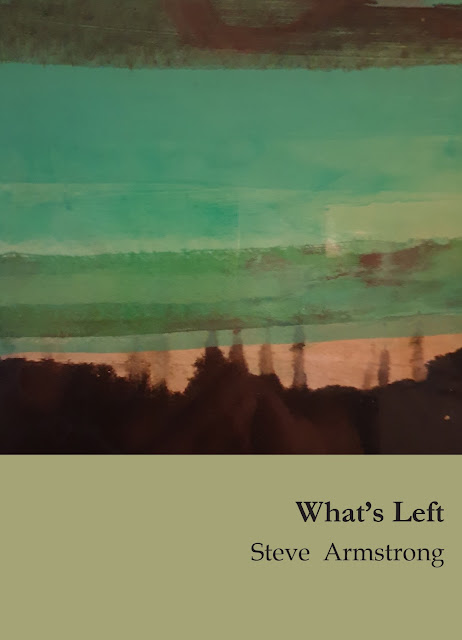
I’m thrilled to have joined your ranks; my pocket book What’s Left was launched December 2020. 

I’m a poet living in Newcastle, who works as social worker/counsellor when I’m not writing.

Dimitra Harvey, poet and editor of Mascara Literary Review launched What’s Left at the Poet’s Picnic in Markwell, and said in conclusion-
   “

For me, Steve’s poetry attends to what Burnside describes as ‘a new science of belonging’ — one that, in his words, puts us ‘back in the open’, seeks ‘to make us both vulnerable and wondrous again — to reconnect us’ with the earth. What’s Lef is charged with that ecological imperative to dwell in and with the rest of the world in a new way.”
This poem Lizards the is taken from the collection.

Lizards

The fetor strikes me first,
and then I find them, a pair of shingle-backs
with armoured scales of polished brown.
They lie close together by the sandy track
that takes me along the high-line of a dry lake.

The smaller of the two is dead.
Mobbing flies and his sinking, say to me,
they’ve spent some time like this.

She’s unflinching.
I stop to wonder how long a novice widow
might keep her vigil. Maybe she’ll go
when he’s lost all resemblance to the one she knew,
or when hunger foreshadows her own decease.
I can imagine a crow might drive her off.

My reductive eye—its blinkered flash—
sees only instinct here.
Even though a pared-back vision is not without
its place,
I’ve feelings for this cold-blooded
couple.

They lived alone much of the year,
then each season, still enchanted—imprints held
in memory—they’d meet up again.
How will she live with what was and is no longer?

I stand by them and the last of the evening
light falls into bed,
true as the lake flats.

Steve Armstrong – What’s Left Read More »

Vaughan Rapatahana (Te Ātiawa)

Vaughan Rapatahana (Te Ātiawa) commutes between homes in Hong Kong, Philippines and Aotearoa New Zealand. He is widely published across several genre in both his main languages, te reo Māori and English and his work has been translated into Bahasa Malaysia, Italian, French, Mandarin, Romanian, Spanish.

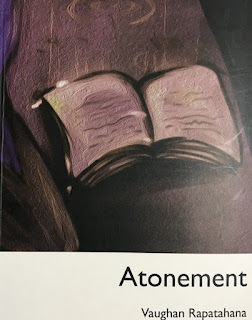
I am a Flying Islands poet – Atonement Macau, 2015.

Right now I am in Mangakino. Lake Maraetai is our mighty lake.

at lake maraetai

these swan

glide in

an ontology

alien to my own.

their empyrean metaphysic,

through all dimensions,

isomorphic

& immutable.

in their majesty

they t r a n s c e n d

       this lake

as they dip deep

    beneath;

as they glissade

with immaculate grace

   a c r o s s  

the      surface;

as they foster

their    funicular   of   cygnets 

in all directions.

this archipelago of swan

transubstantiate

my inauthenticity

into an ecstasy,

I could once

                  never own.

Vaughan Rapatahana (Te Ātiawa) Read More »

Greg McLaren

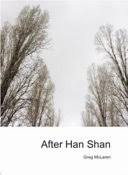
I’m a poet whose work has been published almost widely. After Han Shan, my Flying Islands book, is from way back in 2012. Other books include The Kurri Kurri Book of the DeadAustralian ravens and Windfall (Puncher & Wattmann). 

Valley

 After Louise Crisp

 The yards and droughts, they went on forever.

The hills baring themselves from our shame.

Skeletal fruit trees, their juiceless husks, tiny desiccated bats.

Topsoil sloughed and carved off, earth and its wealth found under dug up,

prised out, words slashed through the insides of houses given up on.

A small black dog in the shed outside, something jumping on its roof.

Was that me? The trees behind, between us and the moon-slick rail,

wiping the sky’s underside.

                                          My daughter, a few specks of her glitter

lit on these pages, on a sick day.

                                                  I thought I was free to wander.

Greg McLaren Read More »

S.K.Kelen

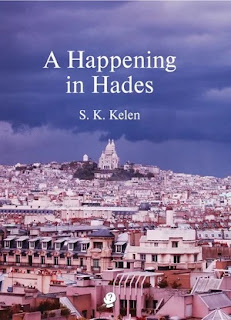
 S. K. Kelen is an Australian poet who enjoys hanging around the house philosophically and travelling. His works have been widely published in journals, ezines and newspapers, anthologies and in his books. Kelen’s oeuvre covers a diverse range of styles and subjects, and includes pastorals, satires, sonnets, odes, narratives, haiku, epics, idylls, horror stories, sci-fi, allegories, prophecies, politics, history, love poems, portraits, travel poems, memory, people and places, meditations and ecstasies. A volume of his new and selected poems was published in 2012. His most recent book of poems, A Happening in Hades, was published by Puncher & Wattmann in 2020.


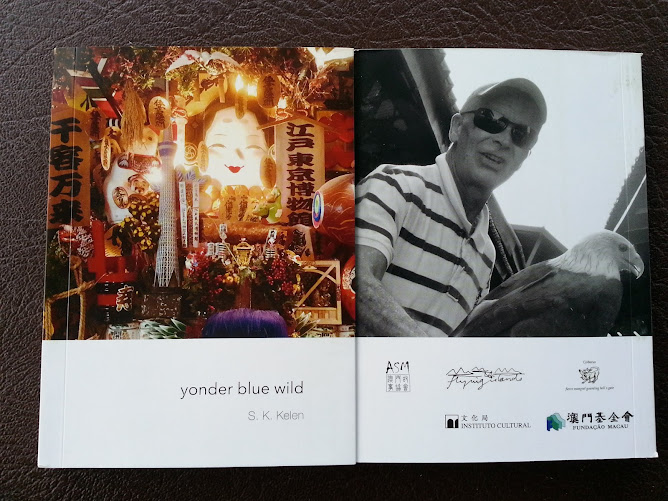
S. K. Kelen’s Flying Islands’ pocket book is Yonder Blue Wild (travel and places 1972 – 2017)

Three poems from Yonder Blue Wild:

Kambah Pool

A bend in the river, water’s clouded by green mud
Deep, really deep, good for proper swimming.
These days only children see spirit life
Work and play, see a world invisible to adults
Clear and just, a solar system glows every grain
Of sand and kids crush evil in one hand,
Until growing up evil comes again.
The light dappling the water surface
Reveals some native spirits’ power
Derives from fireflies. Gumnut babies
Fuss and fight give a lesson how funny
Is the futility of conflict. Children see
That crazy old spirit Pan left his shadow
Hanging from a tree and reflection
Drinking at the river, the old goat’s galloped
Way up mountain, leaps cliff to cliff
Grazes on blackberries growing in the scrub
Gazes over his Murrumbidgee domain.
All glands and rankness, his shaggy coat
Putrid with the smell of ewes, wallabies,
Kangaroos, still a monster, he’ll take
A bird bath later. Dirty musk fills the air
Like a native allergy, tea trees blossom
As he passes, kangaroos lift their heads
Breathe deep his scent and there are dogs, too.
When the kids see Pan they go gulp
If dads could see him they’d beat him to pulp.
You might not see but the musk stench
Wafts on the breeze. Currawongs squawk
The inside-out salute, warble a tone of pity
For the brute. The immigrant god moves inland—
Raucous the cockatoo never shuts up.

Letting Go

The train pulled into Madurai station early

in the morning. She stepped onto the platform

rubbed her eyes dazzled by the sunlight turning

the world white like a clean cotton sheet

she breathed deeply the morning’s incense

and thought it’s true you can smell India all the time.

The morning grew hotter and the light whiter

and the railway platform led to a street

made of dust compacted by a thousand years’

wheels, hooves and feet, the pavement

exploded with ramshackle stalls selling snacks

and bits and pieces, the lime painted buildings,

every now and then a garlanded Shiva or Ganesha.

(Brahmin cows strolled where they damn well pleased).

Thousands of people flowed out of houses

to join the crowd in the street all laughter

and gossip; children ran up hawking

gaudy drinks in plastic bags and paper cones

filled with nuts while old men sold boiled eggs

shouting that their eggs were the best eggs

and some beautiful women in beautiful saris

made tea and offered a cup for fifty rupee.

And in the corner of an eye: the urchins.

Lady Beggar stretched out her hand

breathed slowly a mute scream

performed the first asana from the book

of starvation yoga. Her eyes implored

yet mocked, her lips begged and sneered

her curving right arm pointed

to her mouth then her baby’s mouth,

pointed at her belly then her baby’s belly

she unleashed hunger’s slow ballet,

muttered soft pleas that hypnotised

and tugged the strings a good heart

holds in abundance (there are

many roads to heavenly realms,

not all pleasant). ‘Madam,’ she sang,

‘please madam, just a few pennies

and I can live a while—and my baby’

then the suburban woman’s eyes widened

as she emptied her purse of annas and cents

the beggar yelled delight

suddenly in the air there was a fragrance

like palm wine spilled on a balmy night.

A wild haired man with birds and insects

nesting in his elephantine legs

pointed at the mynah chicks chirping there

shouted ‘Benares! Benares!’

He received her fresh Indian banknotes

with laughing gratitude—

the next fifteen poor souls she gave

all her American dollars & pounds sterling.

The crowd of beggars grew.

Because they were hungry they laughed like crows—

she opened her suitcase and gave away her clothes

signed off the travellers cheques one by one, each

with a teardrop, threw away her camera like a bouquet

and bought every ragged child an ice cream.

The dusty streets are hot with the story.

A young girl asks ‘Can I have your earrings, madam?’

and is given them. A boy runs off with her laptop.

Then it is all white light then out of the light steps

a ragged King Neptune trident in hand

steps lightly through the crowd, waves the beggars on.

‘You are very kind madam those wretches

will live on your money like gods for a day or two

Your hand please — she stared at him and saw

his eyes not only held special intelligence

they reached into her. She came to

and grappled for her master card — lucky.

Her wide eyes narrowed and saw

no matter what she gave away she wouldn’t save

the world, it was weird what she had just done.

The sadhu’s eyes burned like suttee pyres, his muscles

tightened like ropes beneath the dusty rags—in another life

he’d have been a star or a psychopath—

here, he was a strange man in a strange land

He bowed nobly and hailed a taxi.

Megalong Valley

The gods banned machines from ever

entering the last pure tract of Megalong.

Here, even bracken’s picturesque

& the whipbird, breathless

with the beauty of it all,

is silent, reverential.

There’s a waterfall

splashing a rainbow

you walk under

that’s always there and will be

until the earth or sun shifts

sandstone cliffs, a kookaburra

laughs from gorgeous gloom

up & down, up & down.

S.K.Kelen Read More »