In China (when I lived there) in restaurants it was normal a 1/4 acre of food it all arrives the same time everyone got one bite hot before it’s cold spins on the table and faster in winter always the hilarity excess and waste of everything plastic bags and containers out before they left gone before you knew it
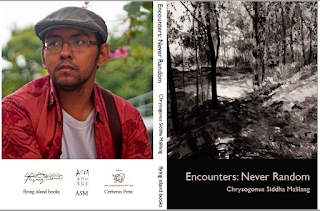
Chrysogonus Siddha Malilang was a nomad writer and translator before finally settling in in Southern Sweden. He started writing professionally – as a journalist – at an early age of 12, mainly motivated by an innocent wish of seeing his name printed in newspaper. After writing a number of short stories for various newspapers, he published two novels in 2006.
In 2013, he got involved with Flying Islands and started translating Iman Budhi Santosa’s poems (Faces of Java) into English. He was then granted Indonesian government funding for a poetry translation project in 2015. His own collection of bilingual poems, Encounters: Never Random, was published in 2017 by Flying Islands.
He is currently teaching Creative Writing in Malmö University, Sweden and at the same time trying to get back to a poet mode. His latest works, translations of three children’s books from Danish to Indonesian, are coming in March 2021.
watching fado in Macao
old fortress under moon that blooms
gentle sea breeze of a humid October night
husky contralto belting the ballad out
from her throat deep the waves
in which we swim ears least perhaps
this is rhythm all in the chest
where memory is found
because of the words all out of language
because as the singer says this is heart’s translation
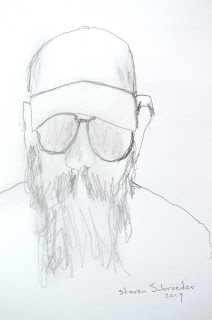
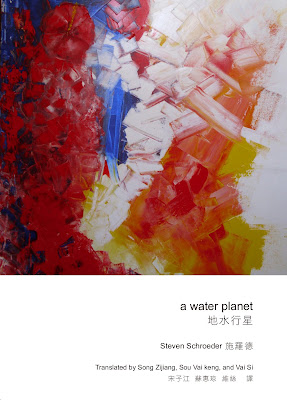
Steven Schroeder is a poet and painter who lives and works in Chicago. More at stevenschroeder.org.
A Suicide Flower
A cadre of hibiscus revolutionaries gather in the hedges along this busy street, lie low to creep beneath the iron fence set up to separate them from masses moving at the speed of money. Here and there a suicide flower throws herself into the crowd, detonates the red she has strapped to her body,
sends a shock of useless beauty lying exposed through a city of desire
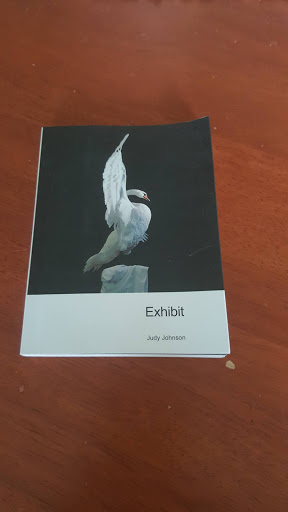
Judy Johnson has published five full length collections and several chapbooks. Her books have won the Victorian Premier’s Award and been shortlisted in both the NSW and WA Premier’s Awards. She’s been awarded the Wesley Michel Wright Prize 3 times. Her latest collection is ‘Dark Convicts'(UWA publishing, 2017) a poetic exploration of her African American First Fleet convict ancestors. Her Flying Islands publication is ‘Exhibit’, 2013.
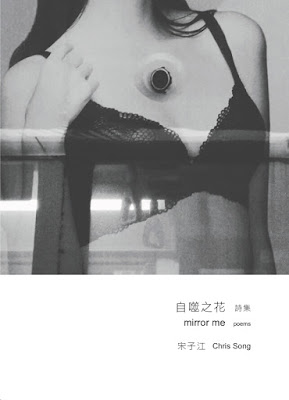
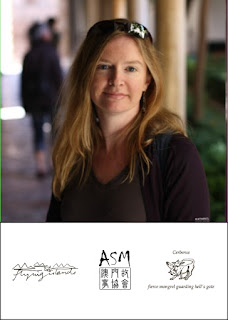
Chris Song is a poet, translator and editor based in Hong Kong. He has published four collections of poetry and many volumes of poetry in translation. Song received an “Extraordinary Mention” at Italy’s UNESCO-recognized Nosside World Poetry Prize 2013. He won the Young Artist Award at the 2017 Hong Kong Arts Development Awards, presented by the Hong Kong Arts Development Council. In 2019, he won the 5th Haizi Poetry Award. Song is now Executive Director of the Hong Kong International Poetry Nights, Editor-in-Chief of Voice & Verse Poetry Magazine, and associate series editor of the Association of Stories in Macao. He also serves as an Arts Advisor to the Hong Kong Arts Development Council.
His flying island pocketbook, mirror me, was published in 2017.
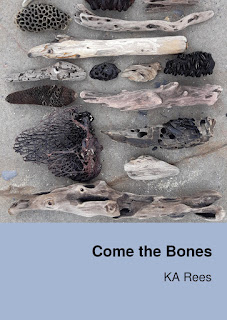
KA Rees writes poetry and short fiction. Her poems and short stories have been included by Australian Poetry, Cordite Poetry Review, Kill Your Darlings’ New Australian Fiction anthology, Margaret River Press, Overland, Review of Australian Fiction, Spineless Wonders and Yalobusha Review, among others.
Kate was shortlisted for the 2016 Judith Wright Poetry Award, she was the recipient of the 2017 Barry Hannah Prize in Fiction and runner-up in the 2018 Peter Cowan Short Story Award. She was a 2019 Varuna fellowship holder for her manuscript of short stories and the national winner of the 2019 joanne burns Microlit Award.
Kate is an inaugural participant in the 2021 Sydney Observatory Residency Program where she is writing the beginnings of her second collection of poetry on the Nocturn, and some of the more peculiar aspects of Sydney’s histories.
A new year ahead, full of potential, energy and disappointment with moments of clarity and elation no doubt for Flying Islands poets.
Jan 1 2021
Alone. Moon brimming as she parachutes into the Nature Reserve, the estuary now a wasteland of sand and sticks and logs and stingray hollows, new lagoons formed, the river has shunted north a hundred metres another place entirely, in just a day.
Clouds slip through the fingers, the radius extreme, the movement incessant and my feet slip on the ribbed sands and I look 360, focus slips from trees to moon, to water in low tide quiescence to sky’s blooming choreography.
We are never alone. A Striated Heron flies silently across the old mouth, black on black, sounds of laughter carry down the river, a party of overnighters, seeing in the new year with alcohol, their togetherness out of sight. A golden crinkle reveals where Helios is hiding and will arise.
When he does the beam zips down the sea and along the flattened river to anoint me and my lens, my work, this solitary concord by river, sea and sky, a vast altar offering Magpies flying down to rifle the stretched beach and silver whistling fish clearing invisible hoops in the two new lagoons.
I jump ephemeral infiltrating tributaries, my right knee winges, so many people died last year, the ones I knew had cancer. None of the 1.8 Million strangled to death by COVID I knew that I know.
Life intensifies on a small butterfly flying the wrong way out to sea, its wavering flight seems uncertain, in the last days of 2020 an earthquake killed people, a landslide killed people, a volcano might have killed people, what lies beneath the soil and sand is ready to surprise.
We live in a continual state of war, war on the Coronavirus, the war on terror, a war on drugs. Vehicles killed people, and bombs, bullets, missiles, knives all killed people.
I’m alive, standing on a sleeve of schist some think could be classified as living in some minimal sense, on an island, a huge island from an aerial perspective, Gumbaynggirr stories explain the details.
Another year, a new year not really, this estuary measures time differently, by the tides, by pluralities and patterns of rainfall, climate change, human engineering ‘solutions’.
Can this text ever enter this world of magic, of tidal imperatives, bird animations and fish ripples, mollusk tracks and crabs, their hidden lives surrounding me, their sandy spoils and bings, and the stingrays’ absence?
Space written, instead of place, a hand-held camera has no sense of the text, no sense of my weight sinking into the Earth each step. I holster the machine, breathe arms out, horse stance. This year is one that will age me.
I have been to so many countries, landed here and now have no wish to be anywhere else. This enormous room is home, my strategy is a quiet life paying more attention to the intimate details, not a new year resolution.
Experience has fallen in value, amid a generation which from 1914 to 1918 had to experience some of the most monstrous events in the history of the world . . . A generation that had gone to school in horse-drawn streetcars now stood in the open air, amid a landscape in which nothing was the same except the clouds and, at its center, in a force field of destructive torrents and explosions, the tiny, fragile human body. Walter Benjamin
Walter Benjamin, ‘Experience and Poverty’, Die Welt im Wort (Prague), December 1933.
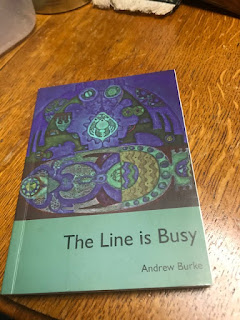
In 1950, Andrew Burke wrote his first poem – in chalk on a slate board. It was variations on the letter A. In 1958 he wrote a poem modeled on Milton’s sonnet on his blindness. Luckily it is lost. In 1960 he wrote a religious play about the Apostles during the time Jesus was in the tomb. It was applauded. He wrote some poems influenced by TSEliot and Gerard Manley Hopkins. They caused a rift in the teachers at the Jesuit school because they were in vers libre: the old priests hated them but the young novices loved them. It was his first controversy. (The only Australian poet in his school anthologies was Dorothea Mac kellor!) Around this time, Burke read the latest TIME magazine from USA. It had a lively article about the San Francisco Renaissance, quoting Lawrence Ferlinghetti who wrote: Priests are but the lamb chops of God. This appealed to Burke who became a weekend beatnik over night. When he left school, he hitch-hiked a la Kerouac across Australia to Sydney where he worked in factories, on trucks, at a rubbish dump and moving furniture. His poems appeared in these early days in Westerly, Nimrod, Overland and the Bulletin, and he returned to Perth to regain his health and joined a circle around Merv and Dorothy Hewett. A local poet William Grono hit the nail on the head when he described them as ‘I am London Magazine and you are Evergreen Review’. Long story short, Andrew Burke has written plays, short stories, a novel, book reviews and some journalism alongside a million advertisements and TV and radio commercials. He has also taught at various universities and writing centres and gained a PhD from Edith Cowan University in 2006 when he was teaching in the backblocks of China. As a poet he has published fourteen titles, one of the most popular being a bi-lingual published by Flying Islands Press in 2017, THE LINE IS BUSY (translated by Iris Fan). He is retired now but still writing and lending a hand to younger poets. A small selection of poems follow.
Going Home
As I exit, I walk by my books in the uni library. There is a shorter way but I choose to hear my old words whispering off the shelf ‘in the swarm of human speech’, as Duncan said. On my way home, in the safe bubble of my Japanese car, I take the tunnel and in the humming dark inexplicably think of my White Russian friend naked on his chopper, whooping loudly in his flight across the desert, ejaculating in ecstasy on his fuel tank. Those were the days, my friend. Now, my tunnel breaks into sunlight. The poet I visited today said, Even the poems are chatty now, and he was right: at the red traffic light lyrical lines come to mind and I hurry to write them down. The lights change and my pen dries out. Diesel fumes invade my thoughts as I drive so I turn the volume up on ABC Jazz to drown out my annoyance. That motel has been there for decades. I remember the one-eyed mother, with her baby in a cot, offering me her love, or something masquerading as that, in dusky afternoon light, a room rented after fleeing her husband, the sound of peak hour traffic slowing as it banked for the suburbs. I’m off in a dream world when the car behind me toots, and I’m on the road again. Her name has gone but her eye patch remains and the baby’s sweet snuffling. I change to a pop music station. Get out of your own head, I advise myself. It’s not safe there, the past is corrosive. At home I park and leave the bubble of car and poem with its own centrifugal force.
Have a Nice Day
Driving to the shopping centre,
Bukovski rambling in my ear,
I’m glad to be sober
and anonymous. When I was
young, all hormones and energy,
my poetic was all about
getting laid. Today I step
from my Toyota, head full
of Buk, and grab a trolley, swearing
at its bent wheels. That’ll help,
my sober brain puts in, sarcastic
as ever. I push and the old desire
to be listened to comes back
and I’m impatient at each counter,
waiting for this, waiting for that.
They’ve got machines now,
not people. Just key in
your late mother’s hat size
and, voila, the money is out
of your account and into theirs,
Messrs Coles and Woolies. Warmly
I remember the décolletage of
Sandy with the metal in her nose,
tongue and ears. Where is she today?
At the scrap metal yard?
This machine doesn’t rock my world.
It doesn’t have Sandy’s knowing smile,
asking sweetly through banded teeth,
Any fly bys? It’s a drive-by, fly by,
bye-bye whirled. Who’ll enjoy
fly bys on my funeral plan?
Buk’s buggered my mood, but he’s
dead and I’m still here, so
who’s to complain. The machine
says, Have a nice day with
a metallic twang and I
kick the trolley straight again.
The limits of my language are the limits of my world. Wittgenstein
As bit players, the limits
of everyday activity
are the limits of our lives. You are
half out the door, going
who knows where. Perhaps you can
tell us when we meet again.
We don’t expect cards or letters,
emails or texts, and only our
limited senses would ask for
photos of the other side.
Did you leave your watch behind?
I picture Sue running
after you, shouting, ‘You forgot
your watch, you forgot your watch.’
Time is only for us now,
empty arms of the clock
hold us back from joining you.
When you were sick
and tired of it all, you left. I can
understand that. Mind the step,
wipe your feet. I expect we will follow you
in time. They chisel years
on tombstones, don’t they, yet facts
are putty in historians’ hands after deeds
are done. It’s a variety show, all this song and dance.
Total it up: More love than hate,
more laughter than tears. Do you need
a torch? Or is that light at the end of the tunnel
light enough? Perhaps you can send us
a clue or two, telling us, What happens next?
Eh? Tell me that.
Taibai Mountain Poem
for Jeanette
I saw a shining moon last night
through leafy poplars and pines
on Taibai Mountain
and thought of you awake
amid the lowing of Brahman bulls.
I thought of Li Bai
spilling ink down the mountain
leaving black stains
and wondered whose Dreaming
spilt red on The Kimberley?
None So Raw As This Our Land
for Mary Maclean
Many have been more exotic places, but this
you offer us, a taste of our land. The air
so crisp with chill we wear entire wardrobes
like hunters’ furs—jeans over track pants,
footy socks, beanies, scarves. Mary’s roo dog
does our hunting: an emu caught at the throat,
plucked and thrown whole on a cooking fire,
smoke full of singed feathers and flesh
stings our noses. We wrestle with tin-canned
standards in words the wind blows away. Huddled
round campfires morning and night, we go where
the sun breaks through as day unrolls. Breakaways,
mulga bush, a never-used dam a hundred years old,
this place of bleached bones and broken glass
queries our presence, unwashed, awkward on
its unpaved ways. Marrakesh, Katmandu—tales
of former hikes, but none so raw as this our land.
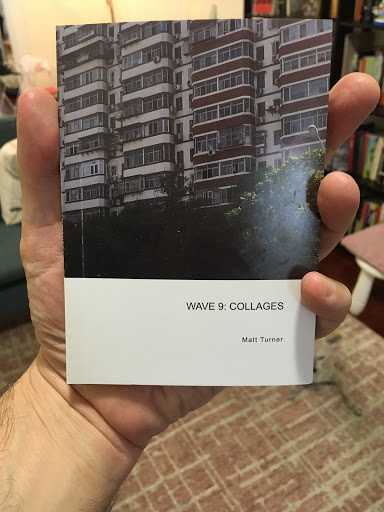
I’m the author of Wave 9: Collages (Flying Islands, 2020) and Not Moving (Broken Sleep Books, 2019). I am the translator of Weeds, by Lu Xun (Seaweed Salad Editions, 2019), and co-translator (with Weng Haiying) of books by Yan Jun, Hu Jiujiu, Ou Ning, Mi Jialu and others. In addition, essays and reviews can be found in Hyperallergic Weekend, LARB China Channel, Cha, Bookforum, Hong Kong Review of Books, Asian Review of Books and other journals.
At present I live in New York City, where I work as a freelance translator and copyeditor. Prior to that I spent nearly a decade in Beijing, where I taught literature at several universities, where I met my wife, and where I found my dog in front of a McDonald’s.
Here is the poem “Parable,” from Wave 9: Collages.
Parable
the mountains open
with a very wide mouth
back then, thinking
through clarity and
saw it was
made of dried
wax
a still face
––––––––––––
arms and
legs wet
*
fruit
wet on the pavement
and from a similar height
*
basket
treacle
false answers
*
you’ve misheard
how
is?
*
as for
being alive, it’s a
wet sleep of
questions asked to
my hand, grabbing at
a rescue
––––––––––––
out
the door, I
fly up,
like a snake
*
a baby doesn’t come out in
broad daylight
*
would out
day and night
–––––––––––––
fire
and beat me
I intend to kill you
but saying it
what else
*
the bride
said:
a mistake has
become to
go, and to come back
no one had
an idea what that was
*
medicine hates passion
*
cry all night until,
having eaten enough fruit, the
illness is cured at last
a slave
builds up the
eye
we all laughed and
went our way
exactly as foretold
in the Book of Unhappy
Skills
And, from the same manuscript, this is the poem “How Can You Face Them.”
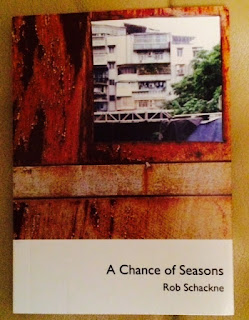
Born in New York, he lived in many countries until Australia finally took him in. He was a Foreign Expert EFL teacher in China for many years. He now lives in Castlemaine, Vic. where he enjoys the blue skies, fresh air and the birds. There were some extreme sports once; now he plays (mostly) respectable chess and pool. A Moonbeam’s Metamorphosis/The Parachuting Man (with Nicholas Coleman) was published in 1979 by LEFTBANK PORTFOLIOS (Melbourne). He published two poetry collections in Shanghai: Snake Wine (2006) and Where Sound Goes When It’s Done (2010). A Chance of Seasons was published by Flying Island Books in 2017. More recently some of his poems have appeared in The Anthill, Oz Burp (Five) zine, Ariel Chart, The Blue Nib Magazine, Bluepepper, The Rye Whiskey Review, Pink Cover Zine, The Raw Art Review, OutlawPoetry, HUSK, the Sappho Lives! Anthology (2019, 2020), Taking Shape (Newcastle Poetry at the Pub Anthology, 2018, 2019, 2020), and the Messages From The Embers bushfire anthology (Black Quill Press, 2020). When he’s not writing, he likes taking photographs. He listens to the Grateful Dead. Some days he thinks there is nothing easy about the Tao.
Some recent poems…
SPOT ME
My strength ebbs away
like a grip on the tide
dangerous invitations
I counted most important
rucking forever, battling
sunrises and sunsets
past the moments
I might’ve stopped
working up the plate rack
what was I thinking
small animals press
a hundred times their weight
now watch me blow
ants have no problem
cats vault fences
I used to measure
now measure other things
TOMORROW
Some carry everything
even their survival
dragged till sundown
just imagine it
all the food in the world
and the pockets of nothing
eating bitterness
hold yours tight
never let me go
imagine the pillow
beneath your head
the limited supply
deal with it they said
can’t eat any more
have another bite
imagine Big Got
clean clothes well fed
his children wait
the pie in the sky
sits at the rainbow
gets on the next bus
CLEANING MY IGLOO
The violence of noise
music as a place to think
the wind is howling
call it peace
cleaning my igloo
the desperate times
that are returned to
their prepositions
or call it protest
against a war
I cannot fracture
however gently
revisiting the light
From “A Chance of Seasons” (Flying Island Books, 2017)
She Saved My Ass
During an altercation
in a bar one night
she saved my ass
my back was turned
he came up with a knife
she hit him with a bottle
she was from the mountains
they believe in hard things
it was then I fell in love
big arms and shoulders
every inch of her 6 foot tall
it was such a simple thing
when we were leaving
she stomped hard on his hand
after that the graceful years
Lord she was so tender
her feet were lovely &
she loved me very well.
A Soldier’s Cough
Head sounds like a drum when it’s scratched Left ear still sore after a blow 25 years ago A throat that lost its whisper song and shout A lonely whisker creeps to just below the eye The neck that shook the bridge for days is weak The old chest looks full but the heart is hollow Old comrades say that vitamins will put it right (A pity the right side doesn’t quite match the left) Broken leg the pelvis spine back my knees and feet Sore from a million steps in the wrong direction A cough that alerts the dog who begins to bark The doctors say there will be no more fighting I climb the stairs slowly to my small apartment Grateful that my eyes can still see you waving While you hang the wind in your white clothes.